Statuspage vs BetterStack vs LiveStatus: Which Status Page Tool Should You Choose in 2026?
A detailed comparison of Statuspage.io, Better Stack, and LiveStatus across pricing, features, mobile support, monitoring, UX, and setup time. Find the right status page tool for your team in 2026.
Choosing a status page tool in 2026 is harder than it used to be. Five years ago, Atlassian Statuspage was the default. You picked it because everyone else did and because there were not many credible alternatives. That is no longer the case. Better Stack (formerly Better Uptime) has grown into a serious contender with deep monitoring roots. And we built LiveStatus to fill a gap we kept running into: a modern, mobile-first status page that does not require enterprise pricing to unlock the features most teams actually need.
This post is a genuine status page comparison across the three platforms. We will cover pricing, features, mobile experience, monitoring, user experience, and setup time. We are biased --- we built LiveStatus --- but we will be honest about where each competitor is stronger. If one of them is a better fit for your team, we would rather you know that upfront.
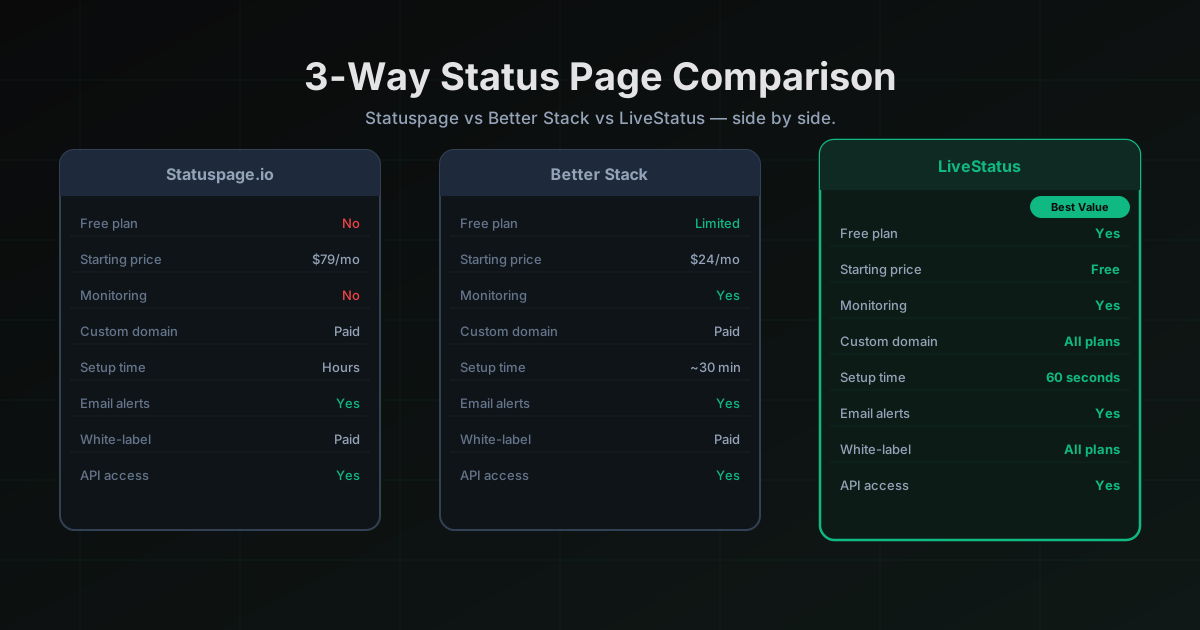
Quick comparison table
Here is a high-level view before we get into the details. This covers the features and pricing tiers most teams evaluate when choosing a status page tool.
| Feature | Statuspage.io | Better Stack | LiveStatus |
|---|---|---|---|
| Free plan | No (discontinued) | Yes (limited) | Yes (1 page, 3 services) |
| Starting paid price | $29/mo (Starter) | $25/mo (Freelancer) | $19/mo (Starter) |
| Custom domain | $99/mo (Growth) | $25/mo (Freelancer) | $19/mo (Starter) |
| Native mobile app (iOS + Android) | No | No | Yes, all plans |
| Push notifications to subscribers | Email/SMS only | Email/SMS/Slack | Push, email, SMS, Slack, Discord |
| 5-minute uptime monitoring | $29/mo (Starter) | $25/mo (Freelancer) | $19/mo (Starter) |
| 60-second uptime monitoring | $1,500/mo (Enterprise) | $85/mo (Business) | $149/mo (Business) |
| Multi-region checks | $399/mo (Business) | $25/mo (Freelancer) | $49/mo (Pro) |
| SSO (SAML/Okta) | $1,500/mo (Enterprise) | $200/mo (Enterprise) | $149/mo (Business) |
| Incident templates | $99/mo (Growth) | Not available | $19/mo (Starter) |
| Slack + Discord integrations | $99/mo (Growth) | $25/mo (Freelancer) | $19/mo (Starter) |
| API access | $399/mo (Business) | $25/mo (Freelancer) | $49/mo (Pro) |
| Audit logs | $1,500/mo (Enterprise) | $200/mo (Enterprise) | $149/mo (Business) |
| On-call scheduling | Not available | $85/mo (Business) | Not available |
| Log management | Not available | Built-in (paid) | Not available |
| Uptime SLA | 99.99% (Business) | 99.99% (Business) | 99.99% (Business) |
| Setup time | 30-60 minutes | 20-40 minutes | Under 5 minutes |
No single tool wins every row. That is the honest reality of this market. Let us break down each dimension.
Pricing
Pricing is where these three products diverge the most, and it is usually the first filter teams apply.
Statuspage.io
Statuspage starts at $29/mo for their Starter plan and scales to $1,500/mo for Enterprise. The jump between tiers is steep: Starter ($29), Growth ($99), Business ($399), Enterprise ($1,500). Features that many teams consider table stakes --- custom domains, incident templates, Slack integrations --- are locked behind the $99/mo Growth plan. SSO and audit logs require Enterprise at $1,500/mo. For a funded startup with 50 employees, that is a real line item.
Statuspage benefits from Atlassian ecosystem bundling. If your team already pays for Jira, Opsgenie, and Confluence, the integration story is compelling and may justify the premium. But if you are evaluating Statuspage on its own merits, the pricing is hard to defend in 2026.
Better Stack
Better Stack starts at $25/mo for their Freelancer plan, with Business at $85/mo and Enterprise at $200/mo. The pricing is more approachable than Statuspage, and the value per dollar is stronger because Better Stack bundles uptime monitoring, on-call scheduling, and log management into a single platform.
The catch is complexity. Better Stack is really three products stitched together: Better Uptime (monitoring), Better Status (status pages), and Logtail (logs). If you need all three, the bundled pricing is genuinely good. If you only need a status page with basic monitoring, you are paying for capabilities you will not use. Their free plan exists but is limited enough that most teams outgrow it within weeks.
LiveStatus
LiveStatus starts at $19/mo for Starter, with Pro at $49/mo and Business at $149/mo. Custom domains, incident templates, and Slack/Discord integrations are included starting at $19/mo --- features that Statuspage gates at $99/mo and above.
We are less expensive than both competitors at every tier. That is by design. We think status pages have been overpriced for years, and we built our cost structure to reflect what this category should actually cost. The trade-off is that we do not bundle on-call scheduling or log management. If you need those, you will need separate tools or Better Stack's all-in-one approach.
For a full breakdown of our plans, see our pricing page.
Features
Where Statuspage wins
Statuspage has the deepest integration with the Atlassian ecosystem. If your team runs on Jira Service Management and Opsgenie, Statuspage connects natively to your existing incident workflows. Incidents created in Opsgenie can automatically update your status page. Jira tickets can be linked to incidents. For teams already embedded in Atlassian's world, this is a genuine advantage that neither Better Stack nor LiveStatus can fully replicate today.
Statuspage also has the longest track record. They have been running since 2013 and serving enterprise customers since before most alternatives existed. For risk-averse organizations where "nobody gets fired for buying Atlassian" is a real consideration, that history matters.
Where Better Stack wins
Better Stack's monitoring is best-in-class in this comparison. Their uptime monitoring includes multi-region checks, screenshot capture on failure, and detailed response time graphs --- all starting on their $25/mo plan. On-call scheduling with escalation policies, phone call alerts, and calendar integration is built in. And Logtail gives you centralized log management that can correlate with uptime incidents.
If your primary need is a comprehensive observability platform that happens to include status pages, Better Stack is the strongest option of the three. They have built a genuinely impressive all-in-one product for DevOps teams.
Better Stack also offers API access on all paid plans, which is a point in their favor for teams that want to automate everything.
Where LiveStatus wins
LiveStatus was built for speed and simplicity. Our setup flow takes under five minutes from signup to a live, branded status page. That is not marketing --- it is a design constraint we hold ourselves to. Every screen, every workflow, every default was chosen to eliminate friction.
The native mobile app is our biggest differentiator. Neither Statuspage nor Better Stack offers a dedicated iOS and Android app. LiveStatus does, on every plan including free. You can create incidents, update component status, and notify subscribers from your phone in under 30 seconds. For on-call engineers who are not always at their laptop, this matters more than any feature comparison table can convey.
We also include incident templates, subscriber notifications via push/email/SMS/Slack/Discord, and custom domains starting at $19/mo. These are features that Statuspage charges $99 to $399/mo for.
For a deeper dive on how we compare to Statuspage specifically, see our full Statuspage comparison.
Mobile experience
This is the category where the gap is widest.
Statuspage has no mobile app. Managing incidents on the go means logging into the Atlassian web interface from a mobile browser. If you have ever tried to navigate Atlassian's UI on a phone, you know this is not a pleasant experience. It works, but slowly and with friction.
Better Stack has a mobile app focused on alert management and on-call. It handles acknowledging alerts and escalations well, but the status page management features are limited. You cannot easily create a detailed incident update from the app with the same fidelity as the web interface.
LiveStatus was designed mobile-first. The iOS and Android app is not a companion --- it is a first-class interface. You can do everything from your phone: create and update incidents, manage components, view subscriber counts, customize your page, and push notifications. The app sends you push alerts when monitors detect issues, so you can respond before your users even notice.
For teams where the person responding to incidents is often away from a desk --- which, in 2026, is most teams --- the mobile experience is not a nice-to-have. It is the primary interface.
Monitoring
All three platforms offer uptime monitoring, but the depth varies.
Statuspage provides basic HTTP/HTTPS monitoring with 5-minute intervals on their Starter plan. It is functional but minimal. For serious monitoring, most Statuspage users pair it with a dedicated tool like Datadog, PagerDuty, or Pingdom, which adds cost and complexity.
Better Stack leads here. Their monitoring includes HTTP, TCP, DNS, ping, and keyword checks. Multi-region monitoring is available on all paid plans. Response time graphs are detailed and useful. Screenshot capture on failure helps with debugging. If monitoring depth is your top priority, Better Stack is the clear winner.
LiveStatus offers HTTP/HTTPS monitoring with 5-minute checks on Starter, 1-minute checks on Business, and multi-region checks starting at Pro ($49/mo). It covers what 90% of teams need. We do not match Better Stack's monitoring depth --- no TCP/DNS checks, no screenshot capture --- and we are transparent about that. If you need advanced monitoring, pair LiveStatus with a dedicated monitoring tool or consider Better Stack.
User experience and setup
Statuspage setup involves creating an Atlassian account (or linking an existing one), configuring your organization, setting up components, and customizing your page theme. The interface carries the weight of Atlassian's enterprise design system --- functional but dense. Plan on 30 to 60 minutes to get a fully configured page live. Ongoing management is straightforward once you learn the interface, but the learning curve is steeper than it should be for a status page.
Better Stack setup is faster, around 20 to 40 minutes. The interface is modern and well-designed. However, because Better Stack is three products in one (monitoring, status pages, on-call), there are more concepts to understand upfront. The status page builder itself is clean, but you may find yourself navigating between different sections of the product to connect monitors to your status page components. Once configured, the day-to-day experience is solid.
LiveStatus was designed to get you from zero to a live status page in under five minutes. Sign up, name your page, add your services, connect a custom domain if you want one, and you are live. The interface is intentionally minimal --- not because we cut corners, but because status pages should not require a training session. Incident creation takes three taps on mobile or three clicks on web. This simplicity is a trade-off: if you want granular control over every aspect of your page layout, Statuspage offers more customization options.
Who should pick what
Choose Statuspage if your organization is deeply invested in the Atlassian ecosystem (Jira, Opsgenie, Confluence) and values tight integration over cost. If you are already paying for Atlassian's suite and your incident workflow runs through Opsgenie, Statuspage is the natural fit. The premium pricing is easier to justify when it eliminates integration work.
Choose Better Stack if you want a single platform for monitoring, status pages, on-call scheduling, and log management. If you are building your observability stack from scratch and want fewer vendors, Better Stack's bundled approach saves time and potentially money compared to buying each capability separately. Their monitoring depth is genuinely best-in-class in this comparison.
Choose LiveStatus if you want a fast, affordable, mobile-first status page that does not lock core features behind enterprise pricing. If your team responds to incidents from phones as often as laptops, if you want to be set up in minutes rather than hours, and if you think $99/mo for a custom domain on a status page is unreasonable --- LiveStatus was built for you.
Ready to try it? Sign up for free and have your status page live in five minutes.
The bottom line
The statuspage alternative market in 2026 is healthy, and that is good for everyone. Statuspage defined the category and still serves enterprise teams well. Better Stack built something genuinely impressive for DevOps teams who want monitoring, alerting, and status pages in one place. LiveStatus delivers the fastest, most affordable, mobile-first status page experience available.
There is no universally correct answer. But if you have read this far, you probably have a sense of which trade-offs matter most to your team. Pick the tool that matches your priorities, not the one with the longest feature list or the biggest brand name.
If you are leaning toward LiveStatus, we would love to have you. Our free plan is a real product, not a trial. Start there, and upgrade if and when you need to.
More posts
The Best BetterStack Alternative in 2026: LiveStatus
Looking for a BetterStack or Statuspage alternative? LiveStatus gives you beautiful status pages and uptime monitoring without the enterprise price tag.
Why Every API Provider Needs a Status Page
API providers without a status page are leaving developer trust on the table. Here's what a proper API status page does, what it covers, and why it reduces your support load while your incidents are still in progress.
How a Status Page Cuts Support Tickets by 40%
The math behind how a status page reduces support ticket volume during incidents. Email subscribers, SMS alerts, proactive communication, and why the ROI shows up in your support metrics within the first incident.